




"I grew up in church and always felt like being curious about Buddha meant leaving something behind. This reads EXACTLY like the Gospels I was raised on, chapter and verse. I finally got to explore without the guilt."
The Gospel of Buddha
The Gospel of Buddha
Couldn't load pickup availability

The Gospel of Buddha
 Money-Back Guarantee
 Low On Stock
Is this book for you?
Is this book for you?
If you…
- Were raised on the Bible
- Feel drawn to the Buddha, but won't convert
- Love stories more than lectures
- Never finished the old texts
- Are carrying a grief that won't lift
- Want his whole life in one book
- Read a Buddhist quote that stuck with you
- Want wisdom that feels familiar, not foreign
- Want a classic worth passing down
Then The Gospel of Buddha was written for you.
How long does shipping take?
How long does shipping take?
We ship worldwide, fully insured and tracked from our door to yours. Most orders arrive within 5 to 14 days depending on your location.
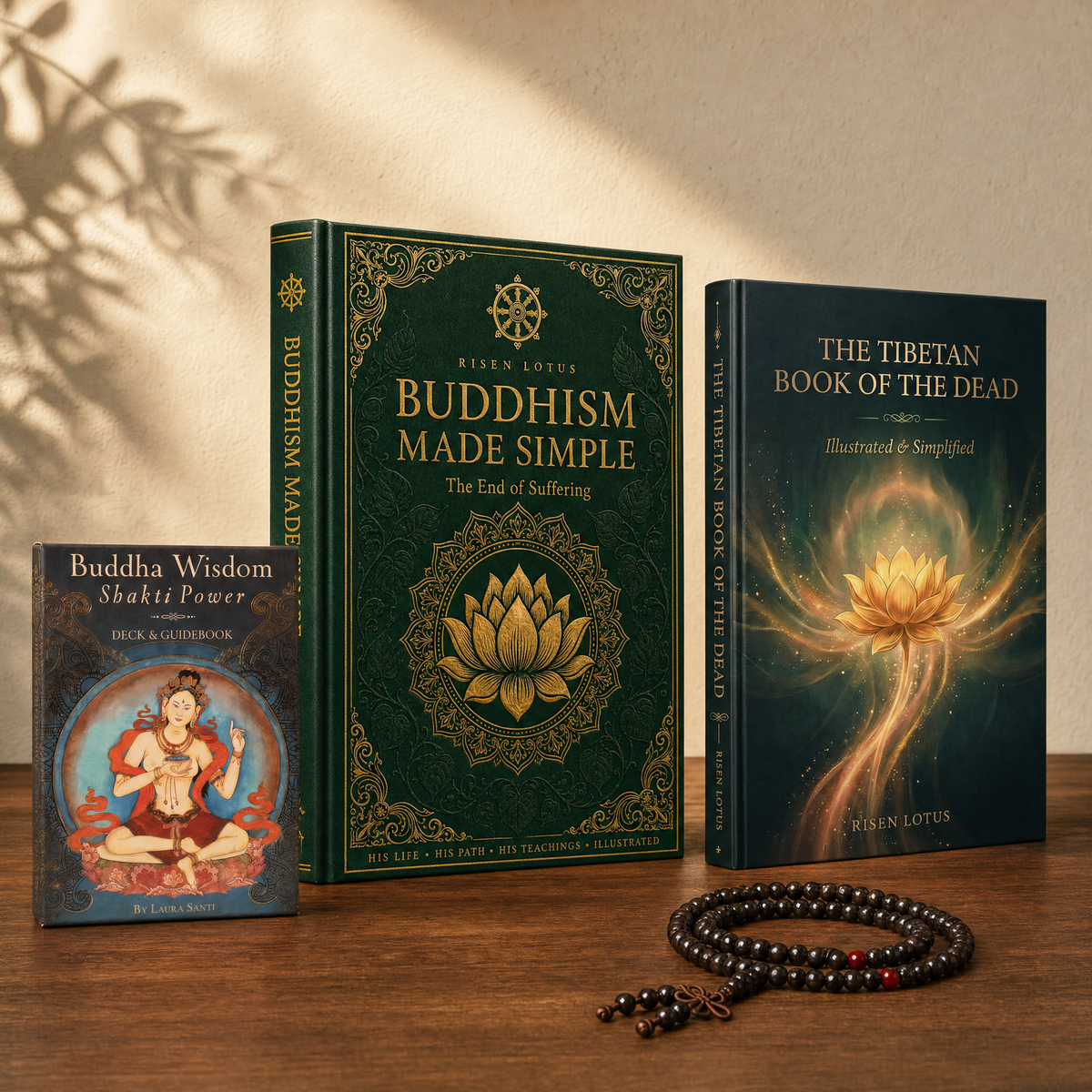

The life of the Buddha, told like the Gospels you grew up with
For 132 years, The Gospel of Buddha has been the West's first meeting with the awakened one.
Across 100 short chapters, numbered chapter and verse, you walk beside him through it all: the sheltered prince, the night he left the palace, the awakening under the Bodhi tree, the first sermon, the parables, and his final words at the very end.
What exactly is The Gospel of Buddha?
In 1894, the philosopher Paul Carus did something no one had dared: he compiled the ancient records of the Buddha's life into one flowing story, told like the Gospels: short chapters, numbered verses, parables, a great sermon, and last words to a beloved disciple.
Buddhist temples adopted it. Schools in Japan and Ceylon taught from it. And the young monk-scholar who translated it into Japanese, D.T. Suzuki, went on to teach Zen to the entire Western world. It has never been out of print since.

What makes this edition special?
This edition gives you everything the cheap reprints never did:
- The Complete Classic: all 100 chapters of the 1894 original, nothing cut
- True Scripture Layout: numbered chapter and verse, printed clean and simple like a Bible
- Easy, Readable Type: none of the cramped print the cheap reprints are known for
- No Filler: no commentary standing between you and the story
- Complete Glossary: every name and term explained
- The Famous Reference Table: the original index linking the Buddha's verses to the Bible's

What's inside?
The Three Woes: the sheltered prince meets old age, sickness, and death
Enlightenment: the temptation under the Bodhi tree, and the dawn that changed the world
The Sermon at Benares: the Four Noble Truths and the Eightfold Path, in his own voice
The Sermon on Abuse: what the Buddha did when a man insulted him to his face
The Lost Son: a father patiently wins back the boy who no longer knows him
The Woman at the Well: "I ask not for caste but for water"
The Mustard Seed: a grieving mother, an impossible request, and the gentlest lesson ever taught
The Last Days: his farewell address, his final meal, and his last words

Where the Gospels and the Buddha meet
If you know the Bible, you have already met these stories. They were placed here so you would feel at home:
- The Temptation: Mara whispers beneath the Bodhi tree, as Satan did in the desert
- The Widow's Two Mites: two copper coins that outweigh a king's treasure
- The Lost Son: Buddhism's own prodigal son
- Walking on Water: a disciple crosses the stream on faith alone
- The Final Meal: a humble supper, a blameless host, and last words that still echo
Over 600 readers have already walked with the Buddha
-

"Raised Baptist, church every Sunday for forty years. I expected to feel like a trespasser and instead I felt at home by page two. Chapter and verse, parables, a sermon. It honors the shape my faith gave me."
-

"I lost my son two years ago and every kind word people offered just slid off. The Mustard Seed didn't fix my grief, it kept me company inside it. That chapter alone was worth the book."
-

"I'm an engineer and I braced for incense and magic. What I got was the most level-headed teacher I've ever read. The Sermon on Abuse is the best conflict advice I know, and it's 2,500 years old."
-

"One chapter every night before bed. They're short, five minutes at most. A hundred nights later I'd lived his whole life with him, and I started again the next evening."
-

"I've bought three books on Buddhism and finished none of them. This one reads like a novel. I went through it in a week and I'm not a reader."
-

"I've had a temper all my life. 'I decline to accept thy abuse' undid something in me. People can hand me their anger now and I just don't take the package."
-

"Bought it for my mother, who's getting on and thinks about the end more than she says. She reads it slowly, out loud sometimes. She calls it her quiet book."
-

"Fifteen years of meditation and I only knew the Buddha in fragments, a quote here, a concept there. This finally gave me the man himself, start to finish. Everything I'd learned clicked into place."
-

"I found out afterwards this is the book that first brought the Buddha to the West, the actual one. Reading it feels like holding a piece of history that happens to calm you down."
-

"I turned sixty this year and 'be ye lamps unto yourselves' met me exactly where I was. No preaching, no pressure. Just a hand on the shoulder from a very old friend."


Frequently Asked Questions
I'm completely new to this. Is it beginner-friendly?
I'm completely new to this. Is it beginner-friendly?
Completely. This book was written for people who had never heard a word about Buddhism, and it has been the world's first step for 132 years. Everything is taught through story: no jargon, no lectures, no background needed. Most readers say it's the first time the Buddha ever felt real to them.
Do I have to be religious, or become a Buddhist?
Do I have to be religious, or become a Buddhist?
Not at all. There's nothing to believe, nothing to join, and no god to worship. Most of our readers aren't religious, they're simply drawn to a calmer, clearer way of living. You take what helps and leave the rest.
I was raised Christian. Does this clash with my faith?
I was raised Christian. Does this clash with my faith?
This is the one Buddhist book written specifically with you in mind. It tells the Buddha's life the way the Gospels tell theirs, and the back of the book even includes the original table linking its verses to Bible verses. Readers raised on scripture say it feels less like leaving home and more like visiting a neighbor. Curiosity is not conversion.
Is this really the Buddha's story?
Is this really the Buddha's story?
Yes. Every chapter is drawn from the ancient Buddhist records, and the reference table shows exactly where each one comes from. It was trusted enough that Buddhist temples and schools in Japan and Ceylon taught from it, and a renowned Zen abbot had it translated for his own students. You're reading the real tradition, arranged so you can actually follow it.
What exactly do I get for $45.99?
What exactly do I get for $45.99?
A 320-page paperback you'll reread for the rest of your life, printed clean and simple the way scripture should be. His whole life, all 26 parables, the great sermons, and his final words, complete and uncut. Courses and retreats that cover a fraction of this charge ten times the price. It's a one-time investment in the story that started it all.
Isn't a 132-year-old book hard to read?
Isn't a 132-year-old book hard to read?
The opposite, and that's why it endured. The chapters are short, the verses are numbered, and the storytelling is plain. It carries the same gentle, old-scripture cadence as the Bible, which is exactly what makes it feel timeless rather than dated. If you can read a Gospel, you can read this.
How is this different from The Dhammapada?
How is this different from The Dhammapada?
The Dhammapada is the Buddha's words, verse by verse. The Gospel of Buddha is his life, the man behind the words. One is what he taught, the other is who he was and how he lived it. They complete each other, and most of our readers end up with both on the shelf.
I'm more logical than spiritual. Will this feel too "woo"?
I'm more logical than spiritual. Will this feel too "woo"?
It was compiled by a philosopher of science who admired the Buddha precisely because he asked for understanding, not blind faith. The stories are about anger, grief, pride, and peace of mind, things you can test against your own life. Some of our most devoted readers are the skeptics.
Will this actually change anything, or is it just stories?
Will this actually change anything, or is it just stories?
Stories are how the Buddha chose to teach, because a story stays with you where a lecture slides off. Readers tell us the parables surface at the exact moments they're needed: an insult, a loss, a sleepless night. You don't memorize this book. It memorizes you.
Which kind of Buddhism is this, Zen, Tibetan, Theravada?
Which kind of Buddhism is this, Zen, Tibetan, Theravada?
All of them. It was deliberately written as common ground that every Buddhist school could stand on, which is why schools across traditions adopted it. It's the story beneath every branch: one life, one path, told simply.
Will it help if I'm grieving?
Will it help if I'm grieving?
Many readers come to this book carrying a loss, and the chapter they mention most is The Mustard Seed, the story of a mother learning she is not alone in her grief. It isn't therapy and doesn't pretend to be. But its opening promise is comfort to the weary and sorrow-laden, and 132 years of readers say it keeps that promise.
Is it right as a gift?
Is it right as a gift?
Beautifully so. A timeless classic printed clean and simple, easy for any age to read and meaningful enough for the hardest seasons of life. It's become the book people give when words of their own fall short.
-
Customer Support
We're here for you, seven days a week. Any question, any worry, just reach out at support@risenlotus.com and we'll personally take care of it.
-
Worldwide Shipping
We ship worldwide, fully insured and tracked from our door to yours. Most orders arrive within 5 to 14 days, depending on where you are.
-
30-Day Money-Back Guarantee
Read it for 30 days. If it isn't everything you hoped for, we'll refund you in full, no questions asked. We only want you to keep it if it brings you something real.