





“A MUST read for the anxious mind. The chapter on The Twin Verses showed me the worrying was just my mind, not reality. After YEARS of overthinking, it finally went quiet."
The Dhammapada, Buddhism's Bible
The Dhammapada, Buddhism's Bible
Couldn't load pickup availability
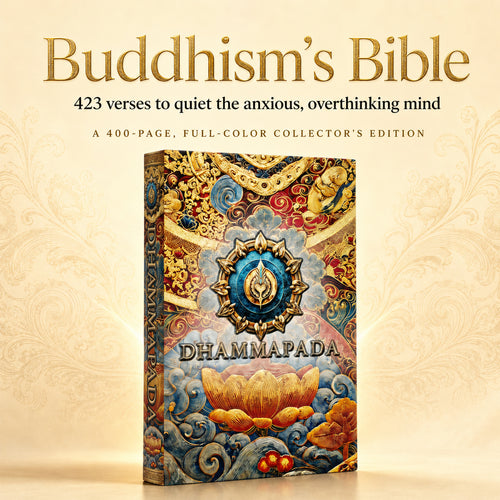
The Dhammapada, Buddhism's Bible
 Money-Back Guarantee
 Low On Stock
Is this book for you?
Is this book for you?
If you…
- Can't switch off your mind
- React in anger, then regret it
- Have it all, still feel empty
- Are facing pain, change, or loss
- Want wisdom, not religion
- Never finished the old texts
- Want the Buddha's real words
Then The Dhammapada was written for you.
How long does shipping take?
How long does shipping take?
We ship worldwide, fully insured and tracked from our door to yours. Most orders arrive within 5 to 14 days depending on your location.
-
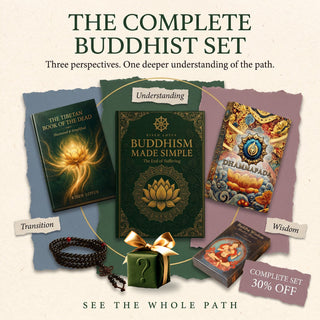
 Buddhism Made Simple
Understanding
Buddhism Made Simple
Understanding
$79.99$55.99 -
 The Dhammapada
this book
All 423 verses
The Dhammapada
this book
All 423 verses
$92.85$64.99 -
 The Tibetan Book of the Dead
Transition
The Tibetan Book of the Dead
Transition
$71.42$49.99 -
 The Wisdom Cards of Lotus
Deck & guidebook
The Wisdom Cards of Lotus
Deck & guidebook
$49.99$34.99 -
 The Dharma Mala
108 beads
The Dharma Mala
108 beads
$29.99$19.99 -
A mystery gift
Opened when the set arrives.
$6.00FREE -
Shipping
Worldwide, insured & tracked
$4.90FREE


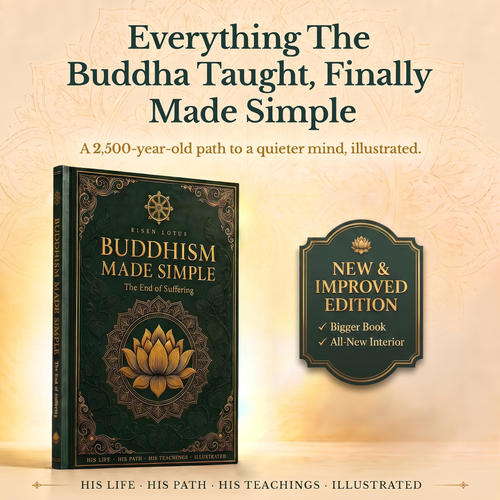
The Buddha's essential teachings on mindfulness, meditation & the path to true enlightenment
For 2,500 years, The Dhammapada has guided millions to wisdom, peace, and spiritual liberation.
Across 423 verses, the Buddha distilled the essence of his philosophy into profound teachings on mindfulness, meditation, karma, ethics, and most importantly, the path to true enlightenment.
What exactly is The Dhammapada?
Often called the "Buddhist Bible," The Dhammapada ("Path of Dharma") is the most beloved and widely read scripture in all of Buddhism.
Its verses were spoken by the Buddha himself and have been passed down since the 3rd century BCE. Together they answer one question: how to find peace, freedom, and clarity in a world that gives you none of them by default.

What makes this edition special?
This modern edition gives you everything the old ones never did:
- Authoritative Translation: F. Max Müller's 1881 classic
- Clear Language: ancient wisdom in plain modern English
- Full-Color Sacred Art: every teaching brought to life
- Chapter Summaries: the meaning behind every section
- Practical Commentary: each teaching tied to daily life
- Complete Glossary: every Buddhist and Pali term explained

What's inside?
Chapter 1: The Twin Verses, on how your thoughts shape everything you feel
Chapter 2: Heedfulness, the foundation of wisdom and awakening
Chapter 3: The Mind, on mastering the thoughts that run you
Chapter 4: Flowers, on beauty, impermanence, and purpose
Chapter 5: The Fool, on recognizing ignorance and delusion
Chapter 6: The Wise, on cultivating discernment and insight
Chapter 7: The Venerable, the way of the enlightened ones
Chapter 8: The Thousands, why one day lived fully beats a thousand spent asleep

Where all of Buddhism begins
Every school of Buddhism, from ancient Theravada to modern Zen, is built on this one book. Read it, and everything else finally makes sense:
- Theravada Buddhism: the earliest core teachings
- Zen Buddhism: mindfulness and presence
- Buddhist Meditation: the training behind a quiet mind
- Buddhist Ethics: right speech, right action, right livelihood
- Buddhist Psychology: why the mind suffers, how it stops
Over 600 readers have already quieted their minds
-

"My mind never gave me a minute of peace. The chapter on The Mind explained why, and what to actually do about it. For the first time in years, I can sit in a quiet room and just be fine."
-

"I'd snap at my family over nothing and hate myself an hour later. The chapter on Anger hit me like a train. I still feel the flash rise, but it doesn't take the wheel anymore."
-

"On paper my life was perfect, so why did I feel empty every morning? The chapter on Thirst named the chase I'd been running for twenty years. I finally stopped needing the next thing."
-

"I lost my husband last year and couldn't find my footing. The verses on impermanence didn't take the grief away, they gave it somewhere to rest. I can breathe again."
-

"I'm an engineer, about as far from spiritual as it gets. These verses read like clear observations on how the mind works, written 2,500 years before psychology existed. I couldn't argue with a single page."
-

"I tried reading the Dhammapada twice before and gave up both times, the old translations are brutal. This one I finished in a weekend. The summaries and the artwork carry you straight through."
-

"One verse with my coffee every morning, that's the whole ritual. Two minutes, and the entire day lands differently. Six months in and I haven't missed a morning."
-

"Bought it as a gift for my brother and ended up keeping it. The artwork alone is worth the price, every page looks like it belongs in a museum. He got his own copy for Christmas."
-

"I've meditated for ten years and read shelves of books about Buddhism. This is the first one that's actually the Buddha, his words, not someone's take on them. It changed how I practice."
-

"Therapy, apps, journals, self-help, nothing ever held for long. One verse from this book will sit with me for days. It's the only thing that's ever truly quieted the noise."


Frequently Asked Questions
I'm completely new to this. Is it beginner-friendly?
I'm completely new to this. Is it beginner-friendly?
Completely. This was written for people starting from zero, no background, no Buddhism, no idea where to begin. Every verse comes with plain-English summaries and full-color art, so it makes sense the very first time you read it. Most readers say it's the first time ancient wisdom ever felt clear.
Do I have to be religious, or become a Buddhist?
Do I have to be religious, or become a Buddhist?
Not at all. There's nothing to believe, nothing to join, and no god to worship. Most of our readers aren't religious, they're simply looking for a calmer, clearer way to live. You take what helps and leave the rest.
Are these really the Buddha's own words?
Are these really the Buddha's own words?
Yes. The Dhammapada is the most direct record of the Buddha's teaching in existence, 423 verses preserved in the Pali canon and translated by F. Max Müller, one of the most respected scholars ever to work on these texts. The language is made clear for modern readers, never watered down. You're not reading someone's interpretation of the Buddha. You're reading him.
What exactly do I get for $64.99?
What exactly do I get for $64.99?
A 400-page, full-color illustrated hardcover you'll return to for the rest of your life. Every verse is illustrated, explained, and made readable, so this isn't a book you finish once and shelve. Courses and retreats that teach a fraction of this charge ten times the price. It's a one-time investment in the oldest wisdom on earth, built to be passed down.
Aren't ancient texts like this impossible to get through?
Aren't ancient texts like this impossible to get through?
The old translations are. They're dense, archaic, and full of foreign terms nobody explains, which is why most people who start the Dhammapada never finish it. This edition was built to fix exactly that: plain modern English, a summary for every chapter, a glossary for every term, and art that pulls you forward. It's the version you'll actually finish.
Is it just a book of quotes?
Is it just a book of quotes?
No, and that's exactly what makes it different. Every verse comes with context and commentary, and each chapter builds on the last, from mastering your thoughts to finding real peace. It reads less like a quote book and more like a training manual for your own mind.
I'm more logical than spiritual. Will this feel too "woo"?
I'm more logical than spiritual. Will this feel too "woo"?
It's the least mystical spiritual book you'll ever pick up. There's no magic in it, just uncomfortably accurate observations about thought, craving, and anger, written 2,500 years before psychology gave them names. Some of our most devoted readers are the skeptics.
Will this actually change anything, or is it just nice words?
Will this actually change anything, or is it just nice words?
Once you understand why the mind races, you start catching it in real time, and that seeing is what loosens the grip. Readers describe the shift as quiet but permanent. Not because the book tells you what to do, but because you can't unsee what it shows you.
Which kind of Buddhism is this, Zen, Tibetan, Theravada?
Which kind of Buddhism is this, Zen, Tibetan, Theravada?
All of them. The Dhammapada is the root text they all grew from, the foundation every school shares. Whatever path you explore later, it starts here.
I already know a fair bit about Buddhism. Is this too basic?
I already know a fair bit about Buddhism. Is this too basic?
The opposite. Longtime readers say having the Buddha's actual words, organized, explained, and beautifully presented, is what finally connected years of scattered reading. And Müller's translation is a classic in its own right.
Will it help with anxiety and overthinking?
Will it help with anxiety and overthinking?
Many readers tell us it does, though it isn't therapy and doesn't pretend to be. The Dhammapada's core teaching is that suffering begins in the mind, and a mind you understand is a mind that grips you less. Calm tends to follow understanding.
Is it right as a gift?
Is it right as a gift?
It might be the best gift we make. A 400-page, full-color hardcover of the oldest wisdom in the world, beautiful enough to display and clear enough for any age. It's become the book people buy twice, once for themselves and once for someone they love.
-
Customer Support
We're here for you, seven days a week. Any question, any worry, just reach out at support@risenlotus.com and we'll personally take care of it.
-
Worldwide Shipping
We ship worldwide, fully insured and tracked from our door to yours. Most orders arrive within 5 to 14 days, depending on where you are.
-
30-Day Money-Back Guarantee
Read it for 30 days. If it isn't everything you hoped for, we'll refund you in full, no questions asked. We only want you to keep it if it brings you something real.
I'm 58 and I've spent most of my life with a mind that never shuts up. Lists at 3am, replaying conversations from ten years ago, the whole routine. My son gave me this for Mother's Day and I'll admit it sat on the nightstand for a couple of weeks because I assumed it would be one of those books you need a philosophy degree to get through. It isn't. The verses are short, some only a couple of lines, and they say more in two lines than most self-help books say in 300 pages. The one about how we are shaped by our thoughts stopped me cold, because that's my entire problem, in one sentence written 2,500 years ago. I read one or two verses with my morning tea and think about them while I garden. I'm not a Buddhist and I don't plan to become one, but this little book has quieted something in me that decades of trying harder never did.
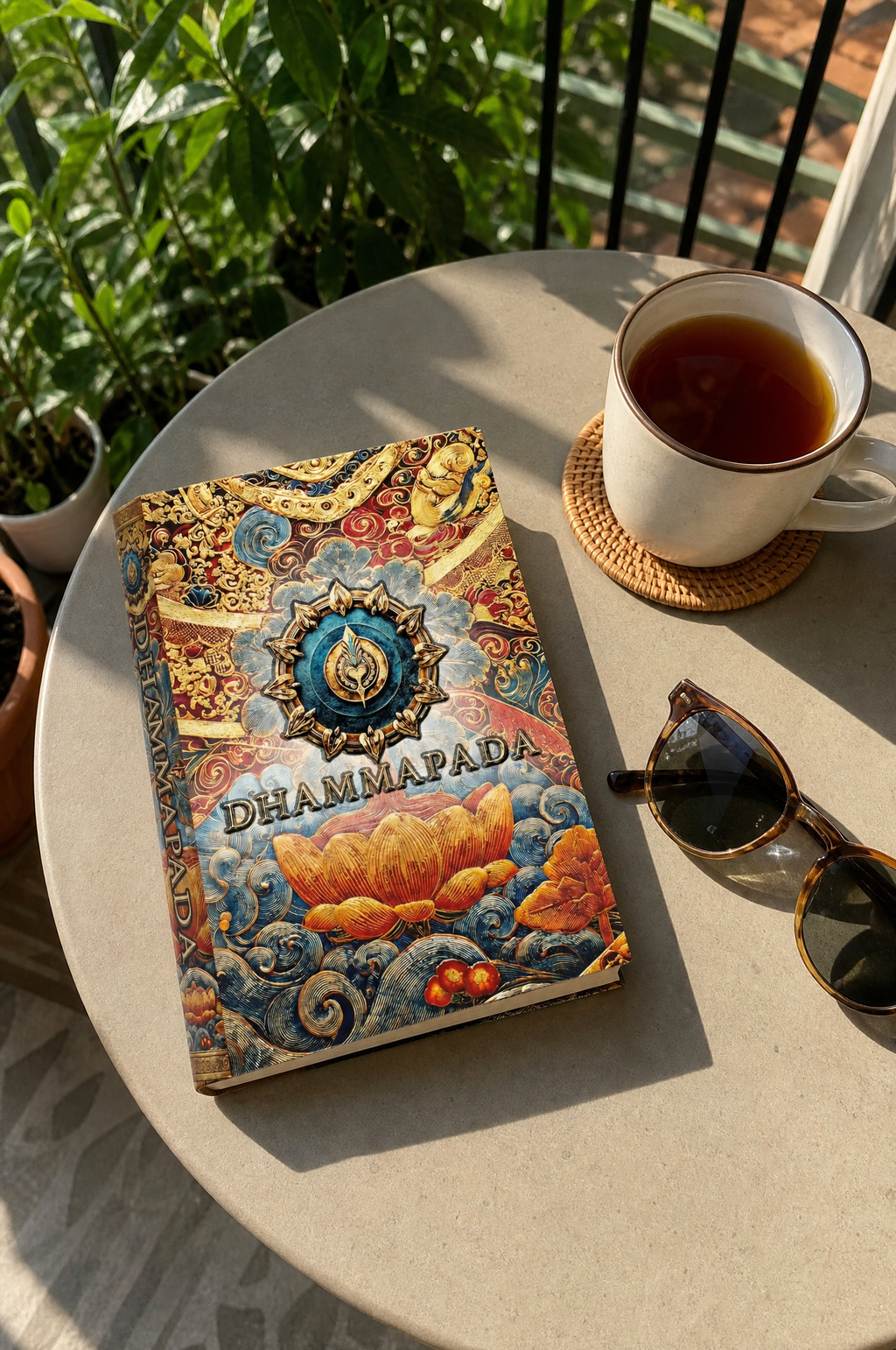
I tried three different meditation apps over the past few years and cancelled all of them. Something about being told to relax by my phone, which is the exact thing making me miserable, never sat right. A guy at work mentioned the Dhammapada was basically where all of this started, so I ordered this version because the reviews said it was readable. It really is. No jargon, no fifty-page scholar's introduction before you get to the actual point. Just the verses, laid out cleanly, with illustrations that give your eyes somewhere to rest. I keep it on my desk and read a page when I feel myself spiraling instead of opening Instagram. It has genuinely replaced the apps for me, and it doesn't need a subscription.
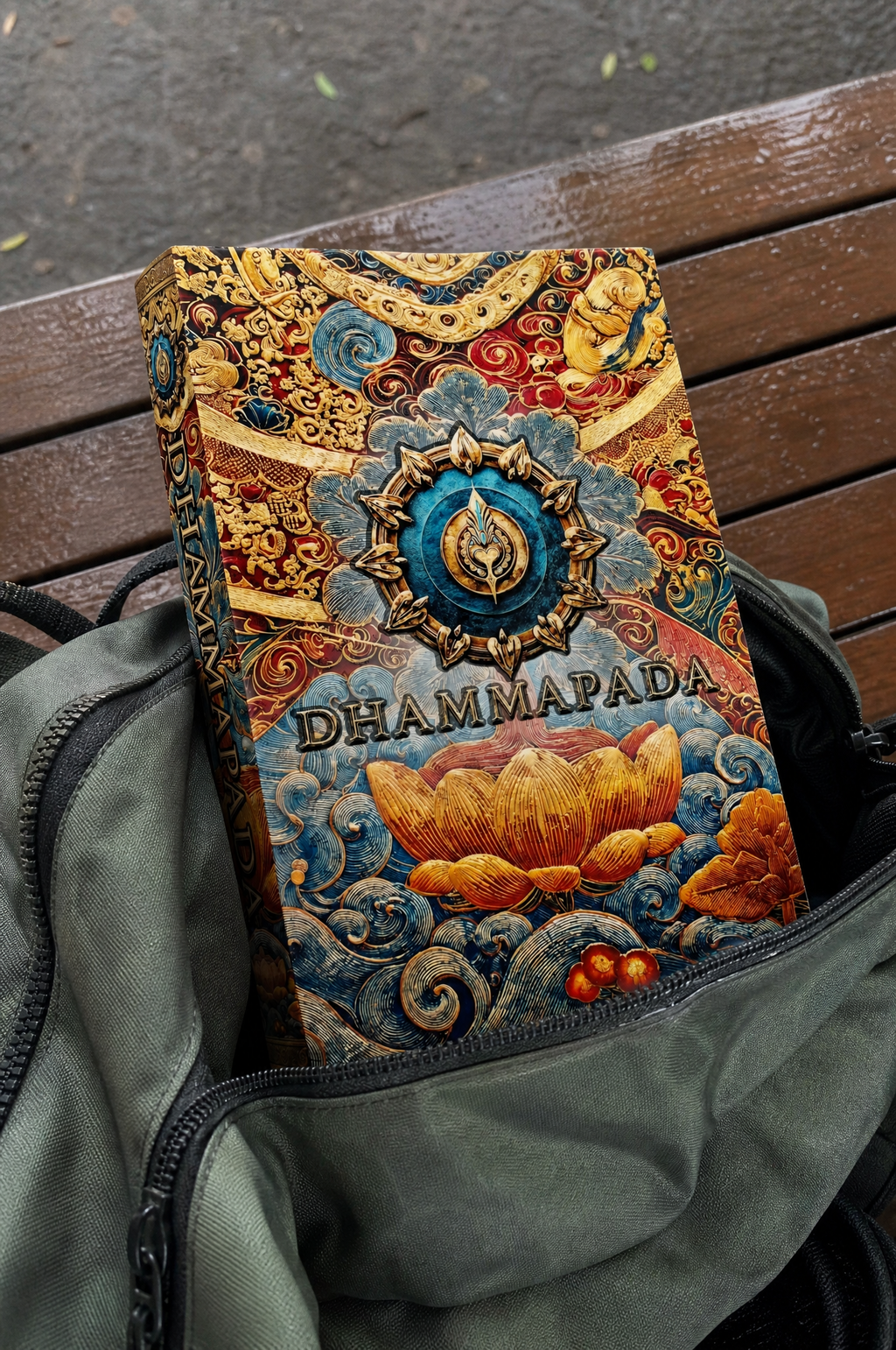
I own the Penguin Classics translation and honestly never finished it the footnotes swallowed the text. This one finally let me just read the thing. The simplified language does lose a bit of the poetry in places if you know the older translations, which is why I'm giving four stars instead of five. But my teenage daughter picked it up off the counter and read the whole first chapter unprompted, and no other version of this text was ever going to do that. For that alone it earns its place on the shelf.
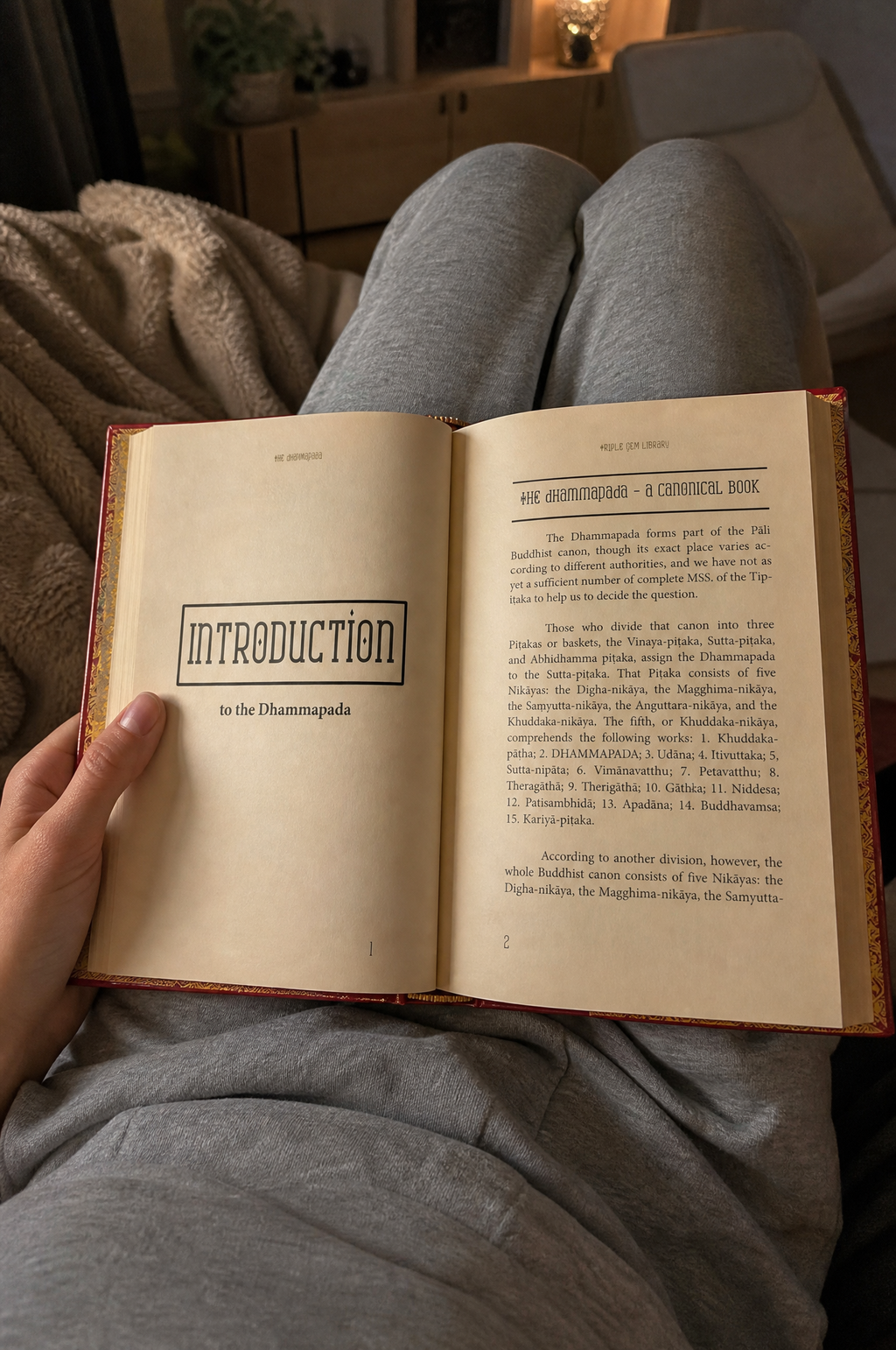
Bought this during the worst stretch of anxiety I've had in years. I wasn't looking for religion, just something older and steadier than the internet's advice. What surprised me is how direct the Buddha is in these verses. It's not vague mystical stuff, it's incredibly practical - about anger, about craving, about the stories we tell ourselves. Some verses I had to put the book down and just sit there. The edition itself is beautiful too, heavier than I expected, the cover is stunning in person. I've already underlined half of it, which I never do to nice books.
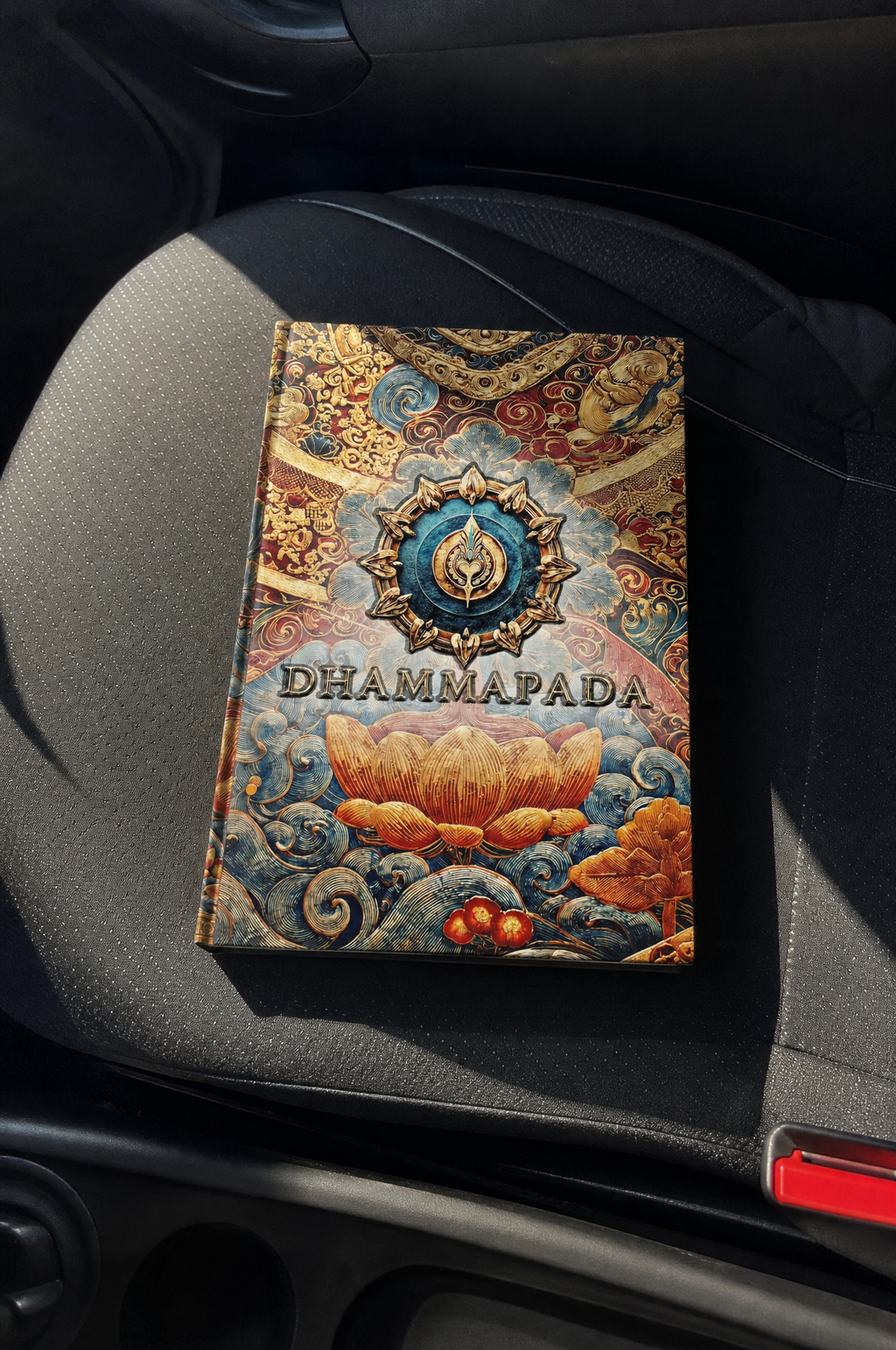
Beautifully done.
It took almost two months to arrive. I contacted "customer service" with no response.
Cheap acid paper and poor binding.
Buyer beware
It looks great its very carefuly put together i cant wait to start reading it. Thank you
Tracking didn’t happen and took a while to arrive but happy with the overall product
I teach middle school and by Friday my nervous system is shot. A friend from my yoga class recommended this and it has become my Saturday morning ritual - coffee, quiet house, a few verses. The chapter on the mind might as well have been written about a classroom of seventh graders, or about me managing them. It's the first "spiritual" book I've read that feels like it was written by someone who actually understood how exhausting being a person is.
Three years sober this month. My sponsor is always saying the mind is the battlefield, and then I read the first page of this book and there it was, the same idea, 2,500 years earlier. I read a verse every morning before my meeting. Some of them feel like they were written for people like me specifically. Craving, letting go, watching your own thoughts. It's all in there.
I ordered this as a gift for my dad who's been going through a hard time since retiring, and ended up ordering a second copy for myself before his even arrived. We text each other a verse number sometimes. It's become our thing. Never expected a book this old to be the way my dad and I finally talk about real stuff.
Studied Buddhism in college and always told people to read the Dhammapada "eventually," knowing full well nobody was going to fight through the academic translations. This is the version I can actually hand to people. Faithful to the spirit, cleaned of the clutter, and the illustrated pages are genuinely lovely.
My therapist mentioned that most of what we work on in session, noticing thoughts instead of believing them, is basically ancient. She was right. This book says in a verse what takes me a $150 hour to remember. Beautiful edition, reads slowly in the best way.
Bought it on a whim from an ad, fully expecting to return it. It's on my nightstand a month later and my phone charges in the kitchen now. That trade alone was worth the price.
Lovely book and the verse-a-day format is exactly what I wanted. One star off because the paper is a touch thinner than I expected for the price. The content though is timeless, no complaints there.
Bought for my book club and it sparked the best discussion we've had all year. Half the group ordered their own copies after.
The cover is even more striking in person. Started reading it for the art, stayed for the wisdom.
Read a verse on the train every morning instead of the news. Been doing it six weeks. My wife says I've been noticeably calmer. The book did that, not me.
Sooo good prod
Felt lighter fast.
Clearer. Lighter.
10/10
I love it!!
Nice product
ok
Really high quality
Good product
I would buy again! 10/10
It is Good
The Dhammapada, Buddhism's Bible
The Dhammapada, Buddhism's Bible